Alto Douro Wine Region: a working cultural landscape
River, schist, terraces, villages, quintas, and the labour behind the view.
Central reading
The Douro is not a backdrop built for visitors. It is a working wine region whose beauty comes from generations of people adapting land, water, stone, transport, and labour to the vine.
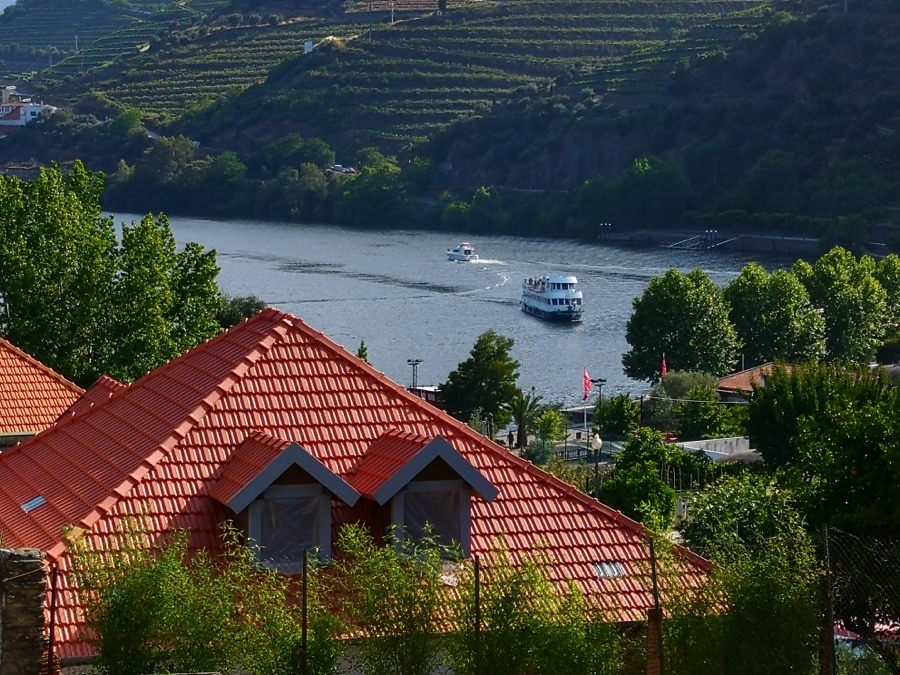
The Douro is often photographed as scenery, but UNESCO recognizes the Alto Douro as a cultural landscape: a place where wine growing, settlement, transport, technology, and long adaptation to steep land remain visible together.
Reading the valley well means looking beyond a tasting room. Stone-walled terraces, newer vineyard forms, quintas, white villages, chapels, roads, river crossings, railway stations, and harvest work are all parts of the same continuing system.
A landscape formed through wine
UNESCO records wine production in the Alto Douro across roughly two millennia and describes a landscape that reflects technical, social, and economic change. Port became internationally known from the eighteenth century, but the heritage value lies in the full system rather than one product alone.
The listed landscape includes the signs of winemaking activity at many scales: terraces, quintas, villages, chapels, roads, watercourses, groves, and farm buildings. The region is still cultivated, so preservation and production are not separate stories.
River, mountains, and schist
The Douro and tributaries including the Corgo, Távora, Torto, and Pinhão form the backbone of a mountain landscape protected from Atlantic winds by the Marão and Montemuro ranges.
Wine growers worked with extremely steep slopes and limited soil and water. Historic socalcos used narrow terraces supported by schist walls; later vineyard forms changed the geometry while keeping the fundamental relationship between slope, sun, stone, and cultivation.
The demarcated region and its wines
Visit Portugal connects the modern regional story to the 1756 creation of the company that delimited vineyards and classified wines. The demarcated region is commonly read through Baixo Corgo, Cima Corgo, and Douro Superior, each part of a wider route rather than an interchangeable set of estates.
The IVDP frames both Porto and Douro protected designations as products of this territory. Porto, Gaia, the valley, wine-growing settlements, and estates belong to one route, but each reveals a different stage of production, trade, ageing, and hospitality.
Peso da Régua and the movement of wine
Peso da Régua developed with the demarcated region and played a central role in producing and selling Port. Visit Portugal recalls the barrels once sent from here on barcos rabelos toward Vila Nova de Gaia for ageing.
Régua therefore reads as more than a transport stop. It is a useful place to understand how river movement, rail, regulation, farming, commerce, and the wider valley met.
Pinhão, the station, and the wine year
The municipality describes Pinhão as flanked by the Douro and Pinhão rivers, in the heart of the demarcated region. Its history as a wine-trade centre moved from rabelo boats to the Douro railway and later road transport.
The nineteenth-century station is covered by 24 panels made from more than 3,000 azulejos. Their scenes trace work across wine production, turning an arrival point into a visual record of pruning, cultivation, harvest, baskets, and river transport.
Vindima is work, timing, and celebration
The grape harvest is one of the clearest moments when visitors can see the region as an active system. Visit Portugal explains that its exact timing changes with weather, grape variety, vineyard location, temperature, humidity, and other local conditions.
Some wineries arrange programmes involving picking or traditional lagar work, but participation is never implied by simply arriving in harvest season. It must be confirmed as a specific programme with the estate, with respect for the people whose working year the experience represents.
Land, wine, movement, settlement, and the returning season.
This guide reads the Alto Douro as a living cultural landscape, not a scenic attraction list. Each act reveals another part of the working region.
Land made cultivable
Terraces and schist walls show generations adapting steep ground to the vine.
Wine made legible
The demarcated region linked place, regulation, production, and quality across the valley.
Wine put in motion
Rabelos, river routes, railway lines, roads, Régua, Pinhão, Porto, and Gaia reveal changing systems of transport and trade.
Settlements inside the system
Quintas, villages, chapels, stations, bridges, and roads are working components of the landscape, not decorative extras.
The season returns
Vindima makes the annual cycle visible, but its timing and visitor programmes remain local, conditional, and explicitly arranged.
Official sources for the timeless context.
This page is cultural and evergreen. For opening hours, tickets, access, transport, and current details, travelers should verify the official sources.
- UNESCO World Heritage Centre: Alto Douro Wine RegionThe Alto Douro's World Heritage cultural-landscape status, its long wine history, terraced vineyards, quintas, villages, chapels, and roads.Checked 2026-09-07
- Visit Portugal: The Douro ValleyOfficial destination framing for reaching the valley by road, train, or boat, plus Régua, Pinhão, viewpoints, and route-planning context.Checked 2026-09-07
- Visit Portugal: Port and Douro Wine RouteThe demarcated wine region, its three sub-regions, transport modes, wine villages, and the need to arrange quinta visits in advance.Checked 2026-09-07
- IVDP: Port and Douro Wines RouteAuthoritative wine-region context and the relationship between Porto, the Douro Demarcated Region, local settlements, quintas, and gastronomy.Checked 2026-09-07
- Visit Portugal: Peso da RéguaRégua's historic role in the demarcated wine region and in the production and movement of Port wine.Checked 2026-09-07
- Municipality of Alijó: PinhãoPinhão's position at the Douro and Pinhão rivers, its wine-trade history, terraces, harvest traditions, bridges, station, and local identity.Checked 2026-09-07
- Turismo de Alijó: Pinhão railway stationThe station's 24 tile panels, the phases of wine production they depict, and the station's role as cultural context rather than just a transport stop.Checked 2026-09-07
- Visit Portugal: Portugal, vindima experienceHarvest-season context, why exact dates vary with local conditions, and how participating wineries may offer explicitly arranged programmes.Checked 2026-09-07
How this connects to the practical guides
This page gives the cultural depth. For base choice, pacing, car decisions, rail realism, transport modes, and wine-visit priorities, continue into the practical DouroValley.app guides.